Charting Blockchain Adaptation Patterns Within Licensed Mobile Gaming Interfaces Across Regulated European Markets
Écrit par Alex Jung · 24/9/2026
Charting Blockchain Adaptation Patterns Within Licensed Mobile Gaming Interfaces Across Regulated European Markets
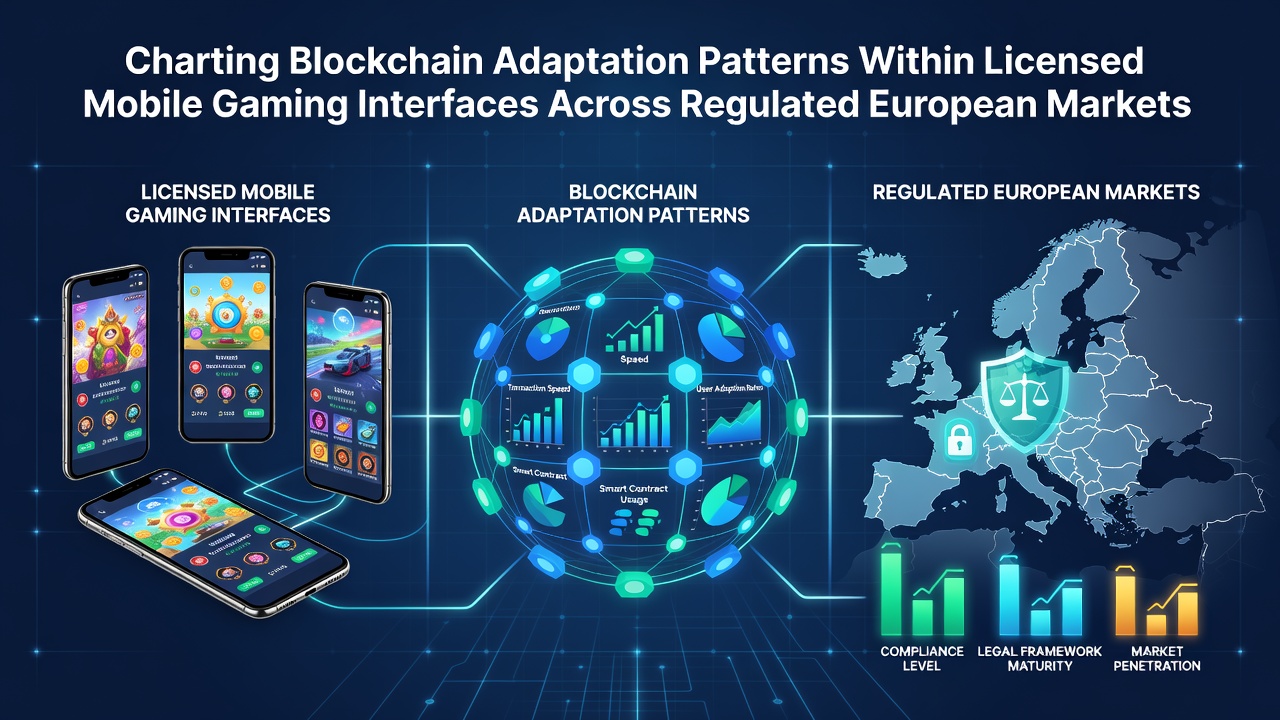
European regulators have tracked steady increases in blockchain technology incorporation into licensed mobile gaming platforms since early 2020s data collection began, with patterns emerging most clearly in markets such as Germany, the Netherlands, Sweden, and Malta. These jurisdictions maintain strict licensing frameworks that require operators to demonstrate secure transaction logging, player fund segregation, and transparent payout mechanisms before mobile interfaces can launch with blockchain components. Observers note that adaptation often starts with backend wallet integrations rather than full on-chain gameplay, allowing operators to meet compliance thresholds while testing distributed ledger features in controlled environments.
Market-Specific Implementation Trends
German authorities introduced updated interstate gambling treaties that opened pathways for blockchain-based verification systems in mobile slot and table game applications, and operators responded by embedding hash-based audit trails that record every bet placement and result without exposing full player identities to public ledgers. In the Netherlands, the Kansspelautoriteit has reviewed multiple license applications featuring smart contract modules for progressive jackpot pools, and data from 2024 through 2025 shows approved operators achieving faster reconciliation cycles when using permissioned blockchain networks instead of traditional centralized databases. Swedish regulators published quarterly statistics indicating that mobile gaming sessions incorporating cryptocurrency settlement options grew from under 5 percent of total volume in 2023 to more than 12 percent by mid-2025, with most growth occurring inside established licensed brands rather than new entrants.
Malta continues to serve as a test bed for more advanced adaptations because its remote gaming framework already permits operators to experiment with layer-two scaling solutions while maintaining full audit access for the Malta Gaming Authority. Researchers at several European universities have documented how these layered approaches reduce settlement times from hours to seconds during peak mobile traffic periods, and the same studies highlight reduced dispute rates when immutable transaction records replace manual reconciliation processes.
Data Patterns Emerging by September 2026
By September 2026, updated European digital finance reporting requirements are scheduled to take effect and will require licensed gaming operators to disclose the proportion of player funds held on distributed ledger systems versus conventional banking rails. Preliminary filings already submitted by several large operators reveal that mobile interfaces using hybrid blockchain models maintain reserve ratios between 18 and 27 percent on-chain, with the remainder held in fiat accounts to satisfy capital adequacy rules. Industry reports compiled by the European Gaming and Betting Association indicate that average mobile session lengths increase by roughly 8 percent when blockchain-verified instant withdrawals are available, yet overall player spend per session shows no statistically significant change compared with traditional payment methods.
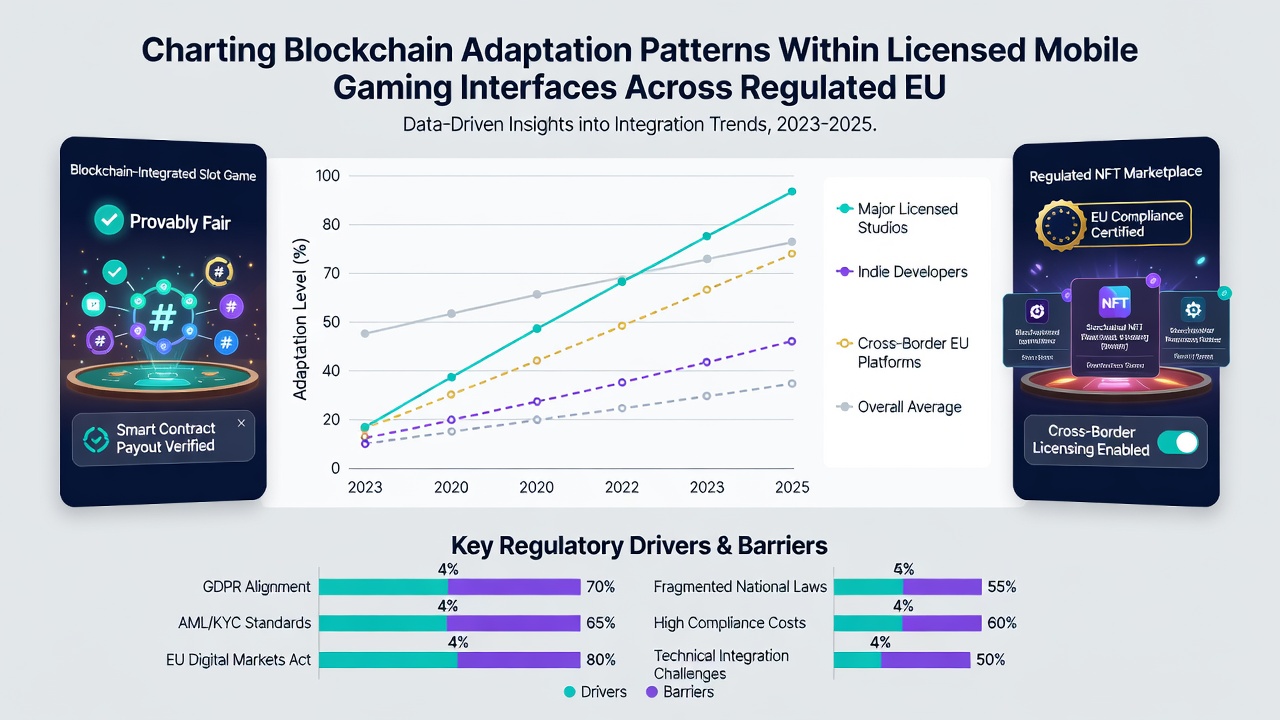
One longitudinal study covering 14 licensed operators across four jurisdictions found that the most common adaptation sequence begins with blockchain integration for jackpot contributions, moves next to player loyalty point ledgers, and only later incorporates full bet settlement on-chain. This staged rollout allows compliance teams to isolate each component during audits and adjust parameters before expanding scope. Figures released by the European Commission’s blockchain observatory confirm that permissioned networks dominate the sector, with public mainnets appearing in fewer than 9 percent of approved mobile implementations as of late 2025.
Technical and Regulatory Interfaces
Technical teams at licensed operators frequently cite the need to reconcile anti-money laundering directives with the pseudonymous nature of many blockchain protocols, and they achieve compliance through know-your-customer gates that link wallet addresses to verified player profiles before any funds move on-chain. Several operators have adopted zero-knowledge proof modules that allow regulators to verify transaction totals without accessing individual player data, and early deployment results show these modules reduce audit preparation time by an average of 40 percent according to internal operator metrics shared with research consortia.
Cross-border patterns reveal that operators licensed in multiple European markets tend to deploy the same core blockchain infrastructure across jurisdictions while customizing front-end interfaces to satisfy local language and responsible gaming display rules. This reuse reduces development costs and creates consistent data sets that regulators can compare when assessing cross-market risk profiles. Academic papers published in 2025 by teams at Dutch and German universities document that such standardized backends correlate with lower incident rates during security stress tests conducted by independent laboratories.
Conclusion
Adaptation patterns across regulated European markets show consistent progression from limited backend uses toward broader mobile interface integration, driven by licensing conditions that prioritize auditability and player protection. Data collected through 2025 and projected into September 2026 indicate that permissioned blockchain solutions will remain the dominant model, while hybrid architectures continue to balance regulatory requirements with operational efficiency. Observers tracking these developments expect further standardization of disclosure formats once the upcoming European digital finance rules apply, creating clearer benchmarks for measuring future adaptation rates across additional member states.